Bikelights.nz vs Trade Me: which is better in 2026
Choose Bikelights if you want to shop for a complete night-riding setup through a specialist bike-light retailer; choose Trade Me if you already know the equipment you need and want to compare individual sellers. For New Zealand mountain bikers, the useful comparison is a coordinated light-and-battery purchase versus a listing-by-listing search—not a contest between advertised lumen figures.
- Bikelights NZ vs Trade Me: choose the specialist shop for a complete MTB light-and-battery shopping brief.
- Trade Me suits riders comparing individual listings for equipment they already know.
- Check the light, compatible battery, mount and charger together; neither shopping route replaces compatibility checks.
- Treat brightness and runtime figures as claims until their operating conditions are clear.
Why this matters
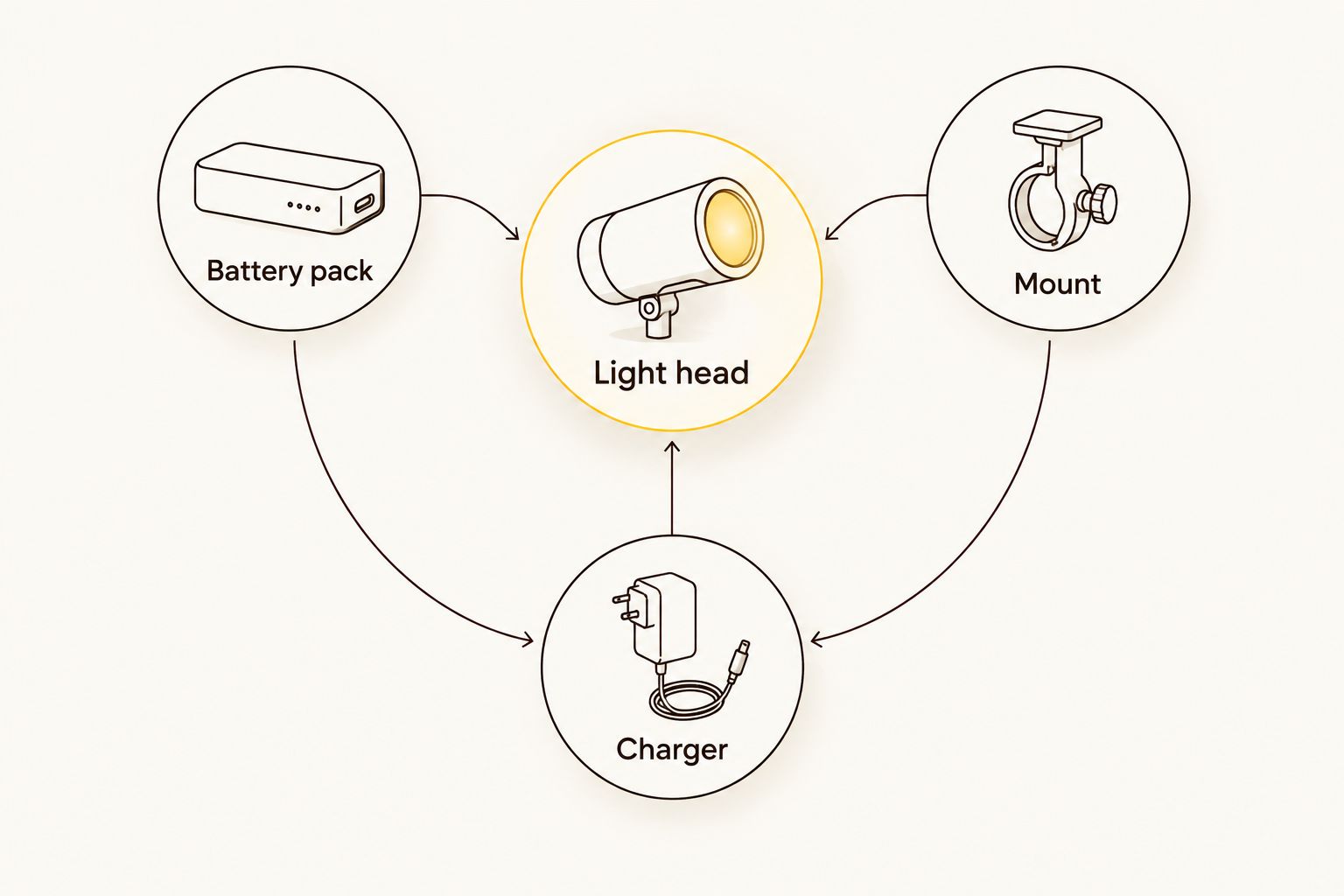
A night-trail light is part of a system. The light head, power supply, mounting hardware and charging equipment must work together, whether you buy them together or separately.
For your 2026 purchase, start with the ride rather than the biggest number in a listing. A short local loop and a longer ride with a road section create different buying questions. Neither a specialist shop nor a marketplace name answers those questions on its own.
Bikelights is the better starting point for mountain bikers shopping for lights and high-capacity batteries together. That recommendation reflects its stated product focus, not a claim that every item includes every accessory or outperforms every marketplace alternative.
At a glance
| Dimension | Bikelights | Trade Me |
|---|---|---|
| Best for | Riders building a complete night-riding setup | Riders searching for known equipment across individual sellers |
| Buying route | Direct purchase from a specialist online bike shop | Marketplace purchase from the seller behind a listing |
| Standout feature | Stated focus on bike lights, high-capacity batteries and accessories | Listing-by-listing comparison across sellers |
| Matching parts | Check compatibility and exactly what is included | Check compatibility and exactly what is included |
| Brightness and runtime evidence | Assess the product's claims and stated conditions | Assess the listing's claims and stated conditions |
| Pricing model | Direct retail purchase | Seller-set fixed-price or auction format, according to the listing |
The table compares buying routes in 2026, not tested light performance. A retailer name does not establish beam quality, battery condition or runtime. Those belong to the exact equipment you are considering.
The specialist shop wins for planning a complete setup
Best for: a rider buying lights and power together.
The specialist shop's stated range covers MTB and road bike lights, high-capacity battery packs, taillights and accessories. That makes it a relevant starting point when your shopping list extends beyond a single front light.
Build your brief around the whole ride. You need a way to illuminate the trail, a secure mounting arrangement and an appropriate power source. If your route includes a road ride home, assess your rear-light requirements separately rather than assuming a front-light purchase covers everything.
A specialist focus does not prove that a particular package is complete. Read the contents carefully: a photograph showing a battery or mount is not a substitute for an explicit included-items list.
- Advantage: the stated product categories match a complete night-riding shopping brief.
- Limitation: you still need to establish the contents and compatibility of the exact items you select.
The practical move is to write down your required components before shopping. Buying the light first and solving the battery question afterwards turns a simple purchase into a small detective story.
Trade Me wins for comparing a known item across sellers
Best for: a rider who knows the exact model or replacement part required.
Trade Me's marketplace structure suits a different task: reviewing individual listings and deciding which seller's offer matches your requirements. That is useful when you already have a model name, connector specification or replacement-part reference.
Keep the search precise. A listing with a similar-looking light is not necessarily a substitute for the equipment already on your bike. Compare the model identification, stated condition, included components and seller's description rather than relying on the main photo.
For second-hand equipment, ask about the actual item rather than treating the original specification as a condition report. A battery's original capacity claim does not establish its present condition.
- Advantage: you can assess separate sellers' offers for the equipment you have identified.
- Limitation: the marketplace is not a single retailer supplying a consistent description for every listing.
Choose Trade Me for a targeted search, not as a shortcut around identifying what you need. A broad search for a bright bike light leaves too many important questions unanswered.
The specialist shop wins on bike-light category focus
Best for: a rider whose purchase centres on trail lights and batteries.
The specialist shop's business description directly covers night-riding equipment. Trade Me is a general marketplace. That is a difference in shopping focus, not evidence that one particular light is brighter, tougher or longer-lasting.
Use that focus to organise your 2026 shortlist. Compare complete configurations: light head plus compatible power source, mounting equipment and charging arrangement. Then consider accessories required by your own bike and route.
This keeps high-capacity batteries in their proper place. They are part of the setup decision, not a magic fix for an unsuitable light or an uncertain connection. A battery only belongs on your shortlist once its compatibility is established.
The limitation of specialist shopping is equally clear: a relevant catalogue does not automatically answer every product question. Confirm the exact specification before buying. The advantage over marketplace browsing is the narrower buying brief, not permission to skip the checks.
Both require the same compatibility checks
Best for: every rider adding or replacing a component.
Neither shopping route earns an automatic win on compatibility. Check the exact light-and-battery combination, including any charger or cable involved. A connector that looks familiar is not enough evidence of an electrical match.
Use this 4-part checklist before committing:
- Light head: identify the exact model and its stated power requirements.
- Battery pack: confirm that the electrical specification and connector match the intended light.
- Mount: confirm attachment to your chosen handlebar, helmet or frame position, as applicable.
- Charger: confirm that the charging equipment is specified for that battery.
For an external-battery setup, also plan where the pack and cable will sit. Check that steering movement does not pull the cable tight and that the pack can be secured without interfering with the bike's controls or moving parts.
Use the bike-light battery compatibility guide to structure your questions. When a specification is unclear, resolve it before connecting equipment. Trial and error is a poor charging strategy.
Both need evidence behind brightness and runtime claims
Best for: riders comparing products rather than shop names.
Neither retailer type wins on light output without product-level evidence. For your 2026 comparison, treat advertised lumen figures as claims rather than independent measurements. A bigger advertised figure does not, by itself, describe how the beam lights your trail.
Ask what the runtime statement actually covers. You need the operating mode, battery used and any stated test conditions. A runtime attached to a low-output setting does not answer how long your intended trail-riding mode lasts.
Use the same questions for both buying routes:
- Which light mode does the runtime refer to?
- Which battery was used for that claim?
- Does the description explain output changes during use?
- Are the beam information and mounting options suitable for your ride?
- Does the battery description identify more than a headline capacity figure?
Capacity comparisons also need context. Milliamp-hour figures alone are not a like-for-like energy comparison when battery voltages differ. Even an energy comparison does not establish runtime without knowing the light's power demand and operating behaviour.
Compare documented conditions, not the size of the headline. Apply that rule equally to a specialist product page and an individual seller's listing.
Pricing: Trade Me offers listing formats, not a guaranteed bargain
Best for: riders who want to choose between seller-set buying formats.
The specialist route is a direct retail purchase. Trade Me listings can use fixed-price or auction formats, according to the listing. That gives the marketplace a genuine distinction in how you buy, without establishing that it is cheaper.
A fixed-price purchase gives you a defined purchase decision. An auction requires you to decide your limit and accept uncertainty about the outcome. Choose the format that suits your patience as well as your equipment needs.
For either route, compare the whole basket. Account for any separately required battery, charger, mount or cable, and check the seller's delivery and purchase terms. Do not assume those terms are identical between marketplace sellers or between separate shops.
A listing-only comparison misses the point if one option includes components the other requires you to source separately. The useful question is which documented setup meets your brief—not which headline catches your eye first.
Final verdict: choose the route that fits your buying job
Choose Bikelights if you are building a night-trail setup
Named winner for the complete-setup shopper: the specialist shop.
You ride MTB trails after dark and want to consider the light, high-capacity battery and accessories together. Start with your route and mounting requirements, then confirm the exact components and their compatibility.
This recommendation is about buying focus. It does not assume a particular bundle, battery specification, runtime, warranty or delivery arrangement.
Choose Trade Me if you are sourcing identified equipment
Named winner for the model-specific shopper: Trade Me.
You already know the item you need and want to assess individual sellers' listings. Compare the exact model, condition, contents and purchase terms, then choose the listing that answers your questions clearly.
For a used battery or light, prioritise evidence about the actual item's condition. An old specification sheet cannot do that job.
One-glance scorecard
| Dimension | Winner |
|---|---|
| Planning a complete night-riding setup | Specialist shop |
| Comparing known equipment across sellers | Trade Me |
| Bike-light category focus | Specialist shop |
| Compatibility checks | Tie: verify the exact components |
| Brightness and runtime evidence | Tie: assess product-level claims |
| Choice of listing purchase format | Trade Me |
These 2026 verdicts separate the shopping experience from equipment performance. Choose the buying route first, then make the product earn its place on your bike.
FAQ
Is Bikelights better than Trade Me for mountain bike lights?
Bikelights is the better starting point when you want to shop for MTB lights, high-capacity batteries and accessories together. Trade Me suits a targeted search for identified equipment across individual sellers; neither route removes the need to check specifications.
Should I buy a complete bike-light setup or separate parts?
Choose the components as a complete system, even if you purchase them separately. Confirm the light, battery, mount and charger requirements before buying, and do not assume a package includes every component shown in its photos.
Is Trade Me always cheaper for bike lights?
No: a marketplace listing does not establish that an equivalent complete setup costs less. Compare the included components, any additional equipment required and the seller's purchase terms before deciding.
Can I use any high-capacity battery with my bike light?
No: the battery must match the light's specified electrical and connector requirements. Check the exact combination and its charging requirements rather than relying on appearance or a capacity claim.
Can I trust advertised bike-light lumens?
Treat advertised lumens as a product claim, not an independent test result. Compare the available beam information and operating conditions as well as the claimed output.
How do I compare bike-light runtime in 2026?
Compare runtime claims only after identifying the operating mode, battery and stated test conditions. A claim for one setting does not establish the runtime of the setting you intend to use.
What should I ask before buying a used bike-light battery?
Ask for the exact model, compatibility information, charging equipment details and evidence of its present condition. The battery's original specification alone does not establish its current performance.
One last thing
Before your first trail outing, fit the complete setup at home and turn the handlebars through their normal movement. Check for cable tension, loose mounts and anything that interferes with the controls.
Then practise changing light modes while stationary. Your first search for the right button should not happen halfway down a rooty descent. Make the setup boringly familiar before the trail gets interesting.