

Bikelights.nz vs Push Bikes: which is better in 2026
Choose Bikelights if you’re building a night-riding setup around bike lights, high-capacity batteries and accessories; choose Push Bikes if you’ve already confirmed a complete, compatible setup there that suits your ride. For this 2026 comparison, the deciding factor is the whole system—not which shop name sits above the biggest brightness claim.
- Bikelights NZ vs Push Bikes: choose by confirmed light, battery and mount compatibility, not shop name alone.
- Bikelights suits NZ night riders shopping for bike lights, high-capacity battery packs and accessories together.
- Choose Push Bikes when its specific setup already meets your mounting, battery and ride requirements.
- Compare runtime only alongside the stated output mode, battery and operating conditions.
Why this matters
A light head alone isn’t a trail-ready setup. You also need a secure mount, a suitable power source and a charging arrangement that matches the equipment. An impressive advertised lumen figure cannot answer those buying questions.
Bikelights is a focused shopping option for NZ night riders buying bike lights, high-capacity battery packs and accessories. That establishes a relevant starting point, not proof that every combination suits every bike.
For a 2026 purchase, decide what your actual ride needs before comparing individual listings. Start with the trail, the time you expect to spend out and where the equipment will fit. Then compare complete setups against the same brief.
At a glance
| Dimension | Bikelights | Push Bikes |
|---|---|---|
| Best for | Riders building a setup from a bike-light-focused shop | Riders who have confirmed a suitable complete setup there |
| Shopping focus | MTB and road lights, high-capacity batteries, taillights and accessories | Assess the specific lights and accessories you intend to buy |
| Battery compatibility | Match each selected light with its specified battery and charger | Apply the same model-specific compatibility checks |
| Mounting | Confirm the mount and battery attachment for your bike | Confirm the mount and battery attachment for your bike |
| Runtime | Assess claims against the selected mode, battery and conditions | Assess claims against the selected mode, battery and conditions |
| Brightness evidence | Treat advertised lumens as claims, not independent results | Treat advertised lumens as claims, not independent results |
| Pricing model | Compare the complete purchase, including required extras | Compare the complete purchase, including required extras |
| Standout buying reason | A stated focus that includes lights and high-capacity battery packs | A specific setup you have already checked and found suitable |
The Push Bikes recommendation is conditional on the equipment you have checked. It is not a claim about its range, fitting services or product performance. Make the comparison at setup level rather than awarding either retailer a blanket win.
Start with the specialist option; keep a confirmed alternative
A focused catalogue is a useful starting point when you’re assembling a night-riding system. You’re shopping for connected parts, not collecting unrelated accessories and hoping they become friends.
The specialist option suits a rider starting from scratch: someone who needs a light, power source and mounting arrangement considered together. Its limitation is straightforward: a relevant shop focus does not establish compatibility between the particular items in your basket.
Push Bikes is the stronger personal choice when you have already verified a suitable setup there. That saves you from replacing a sound decision with another round of browsing. The condition matters: familiarity with a retailer is not the same as checking the light, battery and mount.
Write down your essential requirements before opening another listing. Keep any option that meets them; reject any option that needs an unresolved assumption to work.
A complete setup beats a light-head-only comparison
The stated specialist range includes MTB and road bike lights, high-capacity battery packs, taillights and light accessories. That makes complete-system shopping a relevant reason to start there.
The buying advantage disappears if you compare only light heads. A suitable lamp with an unsuitable mount or battery is still an unfinished setup. Equally, don’t assume that accessories shown alongside a light are included with it.
For either retailer, separate your basket into these parts:
- Light head: the front light selected for your intended riding.
- Mount: the attachment specified for that light and mounting position.
- Battery: an integrated power source or a confirmed compatible external pack.
- Charger: the charging equipment specified for the selected system.
- Extras: any extension, adapter or attachment your particular installation requires.
Check the contents of the exact listing. A product photo is not a packing list, and a complete setup need not arrive in a single box.
Battery compatibility is a tie: verify the exact combination
Neither retailer’s name proves that a battery will work with your light. Compatibility belongs to the equipment combination. Check the specified voltage, connector, polarity and charging requirements rather than relying on a plug that looks familiar.
A high-capacity battery is worth considering when your ride calls for it, but capacity alone does not settle suitability. The pack must match the light’s requirements and fit securely into your setup. Read the bike-light battery compatibility guide before pairing separate components.
If you already own equipment, record its exact model details before shopping. Ask whether the proposed replacement is explicitly compatible with those models, rather than asking whether it works with “normal bike lights”.
Choose Push Bikes for this dimension when its proposed combination is confirmed and the alternative remains unresolved. Reverse that decision when the confirmation runs the other way. A clear compatibility answer beats a familiar badge.
Mounting is another tie: secure fit wins
The better setup is the one you can mount securely on your actual bike. Check handlebar space, attachment dimensions, cable routing and battery placement before treating either basket as finished.
A front light needs a stable position and an adjustable aim. An external battery also needs a secure attachment that keeps it clear of moving parts. Neither requirement disappears because the light itself looks suitable.
Use these 3 checks before committing:
- Bar clearance: confirm space around controls, cables and other accessories.
- Battery security: confirm where the pack attaches and what secures it.
- Cable clearance: turn the handlebars through their normal movement and check for pulling or snagging.
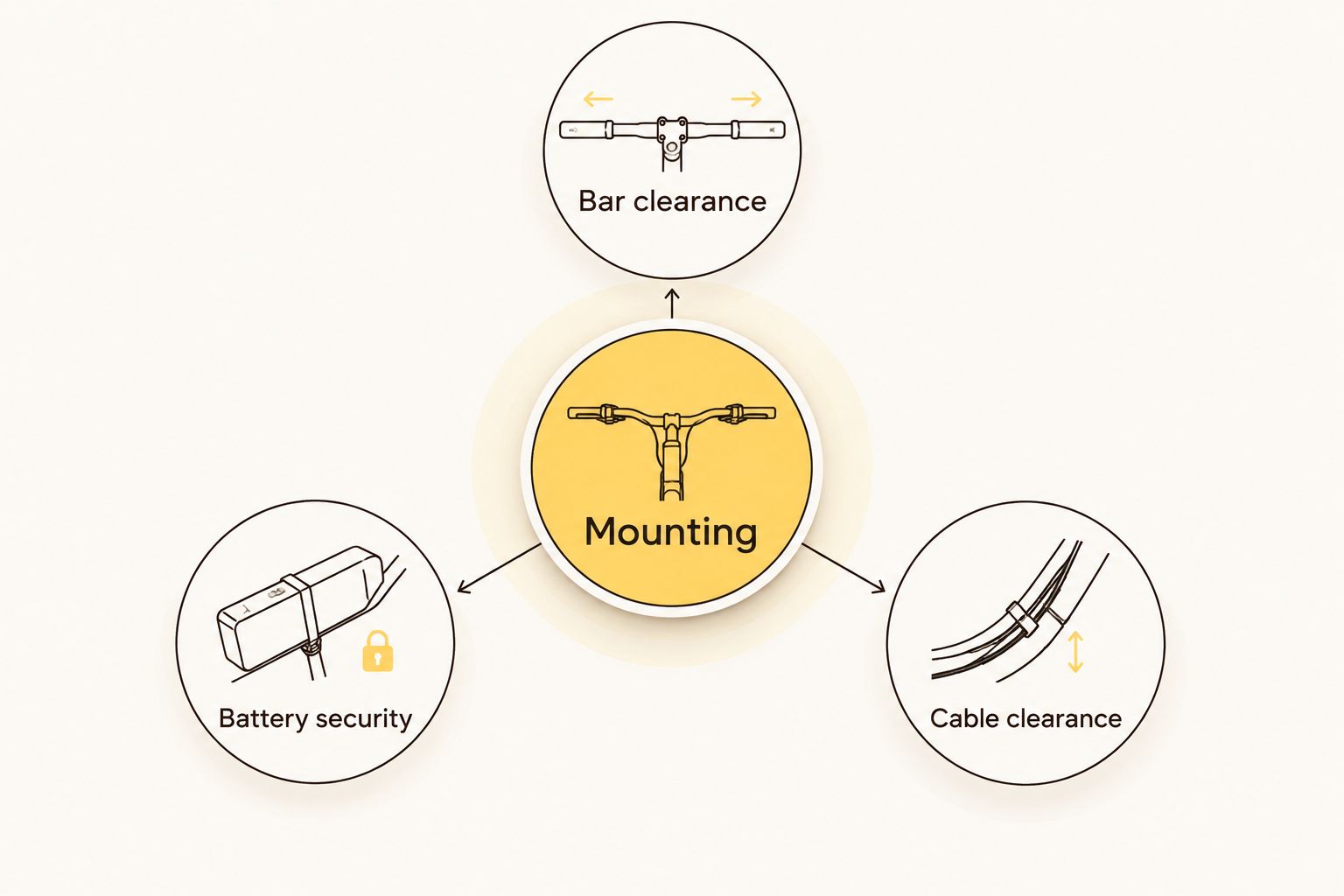
If you’re considering 2 mounting positions—handlebar and helmet—check each attachment separately. Do not assume the same mount serves both, and follow the relevant helmet manufacturer’s accessory guidance. A wobbling light is not a bonus trail feature.
Runtime wins only when the conditions match your ride
A runtime claim needs context: the output setting, battery used, operating conditions and how the light behaves over that period. Compare like with like before declaring either setup the longer-running choice.
A duration quoted for a low setting does not establish how long the light operates at its highest setting. Likewise, a claim attached to one battery does not automatically describe a different pack.
For your 2026 shortlist, use a simple ride brief:
- What setting do you expect to use on the trail?
- What runtime is stated for that setting and the selected battery?
- What operating conditions accompany the claim?
- Does the description explain whether output changes during use?
- What is your plan if the ride takes longer than expected?
Choose the setup whose documented conditions match your needs. If the information does not answer those questions, ask before buying rather than filling the gaps with optimism. Your ride plan needs evidence, not an enthusiastic guess.
Neither shop wins on advertised lumens alone
An advertised lumen figure is a claim about output, not a complete description of trail illumination. Beam shape and aim also affect what you can see. Your buying decision should account for the terrain and where you need the light to fall.
For forest trails, consider whether the beam description suits both the line ahead and the nearby trail edges. For road sections, think about aiming the light without dazzling other people. Do not treat a dramatic product image as a substitute for useful beam information.
When comparing listings in 2026, distinguish manufacturer claims from independent measurements. Only call a result independently tested when a named test actually supports it.
There is no justified retailer-wide brightness winner here. Compare the specific lights, using the same type of evidence for each. A larger advertised number does not excuse unanswered questions about mounting, runtime or battery compatibility.
Compare complete purchases, not headline items
Build the same functional basket for both options before judging value. Start with the light and add every item required to make it usable on your bike.
Whether a listing groups components together or presents them separately, check the exact contents. A grouped purchase makes it easier to see the proposed system; separate components let you retain equipment you already own. Neither arrangement is automatically better.
For a fair 2026 comparison, account for:
- The light and required mount.
- The specified battery and charger, where applicable.
- Any necessary attachment, extension or adapter.
- A rear light if your riding requires one.
- Any replacement component needed to avoid an incompatible pairing.
Also check the current purchase terms directly with each retailer. Keep delivery, returns and warranty questions separate from product suitability: a compatible system and acceptable purchase terms are different requirements.
Do not buy extras merely to make the basket look complete. If an existing component is explicitly compatible and suitable, include it in your plan instead of replacing it without reason.
The standout feature is a setup you can explain
A useful shopping focus gets you started. A checked system gets you ready to make a decision. The strongest option is the one for which you can explain how every essential part works together.
Before you buy, complete this sentence: “This light uses this battery, charges with this equipment and attaches here with this mount.” If any part is uncertain, resolve it first.
That is also a practical way to ask for help. Give the exact light and battery models, your proposed mounting position and the type of riding you intend to do. A precise question is easier to answer than “Will this be bright enough?”
Neither retailer gets an automatic win for accessories you have not checked. Choose the complete, confirmed arrangement over a collection of individually appealing parts.
Build your night-riding setup
Compare bike lights, high-capacity batteries and accessories around your ride requirements.
Final verdict: choose the confirmed system
Choose Bikelights if you’re building a night-riding setup
Best for: NZ mountain bikers shopping for lights, high-capacity batteries and accessories together. The stated product focus matches that task. Check the exact contents, compatible components and operating claims before choosing your combination.
Choose Push Bikes if your suitable setup is already confirmed
Best for: riders who have checked a specific Push Bikes combination against their bike and ride requirements. Keep that option when its light, mount, battery and charging arrangement all fit the brief. There is no need to restart a sound purchase decision simply because another retailer specialises in the category.
| Dimension | Winner |
|---|---|
| Best fit for a new system | Specialist option for starting; confirmed alternative for finishing |
| Shopping focus | Specialist option for its stated light-and-battery focus |
| Battery compatibility | Tie: exact combination must be verified |
| Mounting | Tie: bike-specific fit decides |
| Runtime | Setup with relevant, documented operating conditions |
| Brightness evidence | Neither on advertised lumens alone |
| Complete-purchase value | Basket that meets the same brief without unnecessary extras |
| Standout buying reason | Setup with every essential connection confirmed |
FAQ
Is Bikelights better than Push Bikes for night mountain biking?
Bikelights is a relevant starting point for night mountain bikers buying lights, high-capacity batteries and accessories together. Choose Push Bikes instead when you have already confirmed a complete setup there that meets your mounting, compatibility and ride requirements.
Should I choose the bike light with the biggest lumen figure?
No—advertised lumens alone do not establish which light suits your trail riding. Compare beam information, mounting requirements and runtime conditions alongside the output claim.
Can I use my existing battery with a new bike light?
Use an existing battery only when compatibility with the new light is explicitly confirmed. Check the specified voltage, connector, polarity and charging requirements rather than relying on appearance.
Does a high-capacity battery guarantee a longer night ride?
A high-capacity label alone does not guarantee a particular runtime. Assess the selected light, output mode, compatible battery and stated operating conditions together.
What should I check before buying a complete bike-light setup?
Check the light, mount, power source, charging equipment and any required attachments. Verify the exact listing contents rather than assuming everything pictured is included.
How do I compare the cost of two bike-light setups?
Compare complete purchases that meet the same riding requirements. Include required mounts, compatible power and charging equipment, while accounting for suitable components you already own.
Do I need both a handlebar light and a helmet light?
A second mounting position is a separate setup decision, not an automatic requirement of this comparison. Assess your intended use and verify each attachment, including the helmet manufacturer's accessory guidance.
One last thing
Before your first proper night ride, fit the complete system and check it somewhere familiar. Turn the bars, check the attachments, confirm the controls and aim the beam with consideration for other people.
The easily missed buying detail is often not the light head. It is the mount, cable or battery attachment that turns a promising basket into a usable setup. Sort that before the trailhead, not beside it.